Guides & Comparisons
Traditional Balinese Leathercraft vs Modern Style
The distinction between traditional Balinese leathercraft and modern styles lies in techniques, materials, and cultural significance. Traditional methods often use ancient techniques passed down generations, while modern styles incorporate contemporary designs and sustainable materials.
Days to weeks
On a single traditional pieceBarong & Rangda
Motifs in traditional designsCork & Piñatex
Modern alternatives2027
Perspective reviewedIn Short
Traditional Balinese leathercraft focuses on preserving ancient techniques and cultural heritage, whereas modern styles embrace innovation and sustainability, often incorporating recycled materials.
This contrast highlights the dynamic nature of the craft, where tradition meets contemporary demands.
Traditional artisans often work in family-run workshops, where skills and techniques are passed from one generation to the next.
Modern leathercraft in Bali reflects a global influence, with designers drawing inspiration from international trends and incorporating sustainable practices to meet the demands of a more environmentally conscious market.
The Comparison
Understanding Traditional Balinese Leathercraft vs Modern Style
In the world of leathercraft, the juxtaposition between traditional Balinese leathercraft and modern style is both fascinating and complex.
| Consideration | Traditional Balinese | Modern style |
|---|---|---|
| Focus | Preserving ancient techniques and cultural heritage | Innovation and sustainability, often incorporating recycled materials |
| Where it is made | Family-run workshops, where skills are passed from one generation to the next | Workshops often equipped with advanced tools and machinery that allow for precision and efficiency |
| Stitching | Hand-stitching, which requires a high level of skill and patience | Machine stitching, allowing for mass production |
| Dyes | Natural, plant-based dyes refined over centuries | Synthetic dyes for a wider range of colours and patterns |
| Materials | Mostly locally sourced leather from cattle and goats | Recycled leather and alternatives such as cork, pineapple leather (Piñatex) and mushroom leather |
| Time per piece | Several days, or even weeks, on a single piece | Caters to the fast-paced demands of the global fashion industry |
The best Bali leathercraft artisans using recycled leather in 2027 demonstrate these modern principles, offering innovative products that appeal to environmentally conscious consumers. These artisans often collaborate with international designers to create limited edition collections that highlight the fusion of Balinese craftsmanship with global design trends.
Key Differences
Key Differences: Techniques And Materials
Traditional techniques
Involve hand-stitching and natural dyes, which require a high level of skill and patience. Artisans often spend several days, or even weeks, on a single piece to ensure its quality and authenticity.
Modern methods
Include machine stitching and synthetic dyes for varied designs, allowing for mass production and a wider range of colours and patterns. This approach caters to the fast-paced demands of the global fashion industry.
Material sourcing
Traditional materials are mostly locally sourced, whereas modern styles often use recycled leather and alternative materials, reflecting a shift towards sustainability and ethical production.
Choosing
Choosing The Right Style For Your Needs
Whether you are a boutique store owner seeking the best Bali leather goods wholesalers for boutique stores in 2027, or an individual looking for unique artisan pieces, understanding these styles can guide your purchasing decisions.
Traditional pieces offer a connection to Balinese heritage, with each item telling a story that is deeply intertwined with the island’s culture and history. On the other hand, modern styles provide contemporary appeal and sustainability, appealing to a younger, more eco-conscious audience.
Modern Balinese leathercraft is characterised by its innovative approach, blending contemporary design with eco-friendly practices. Artisans are increasingly using recycled leather and vegan alternatives, catering to the global demand for sustainable products. Designers are experimenting with new materials such as cork, pineapple leather (also known as Piñatex), and mushroom leather.
2027 note — trends and future directions: the leathercraft industry in Bali continues to evolve, with a strong emphasis on sustainability and innovation. In the coming years, it is expected that Balinese leathercraft will further integrate technology into its production processes, including digital design tools and 3D printing. However, the essence of Balinese leathercraft will remain rooted in its cultural heritage, ensuring that each piece continues to carry the spirit of the island.
Traditional
Defining Characteristics Of Traditional Balinese Leathercraft
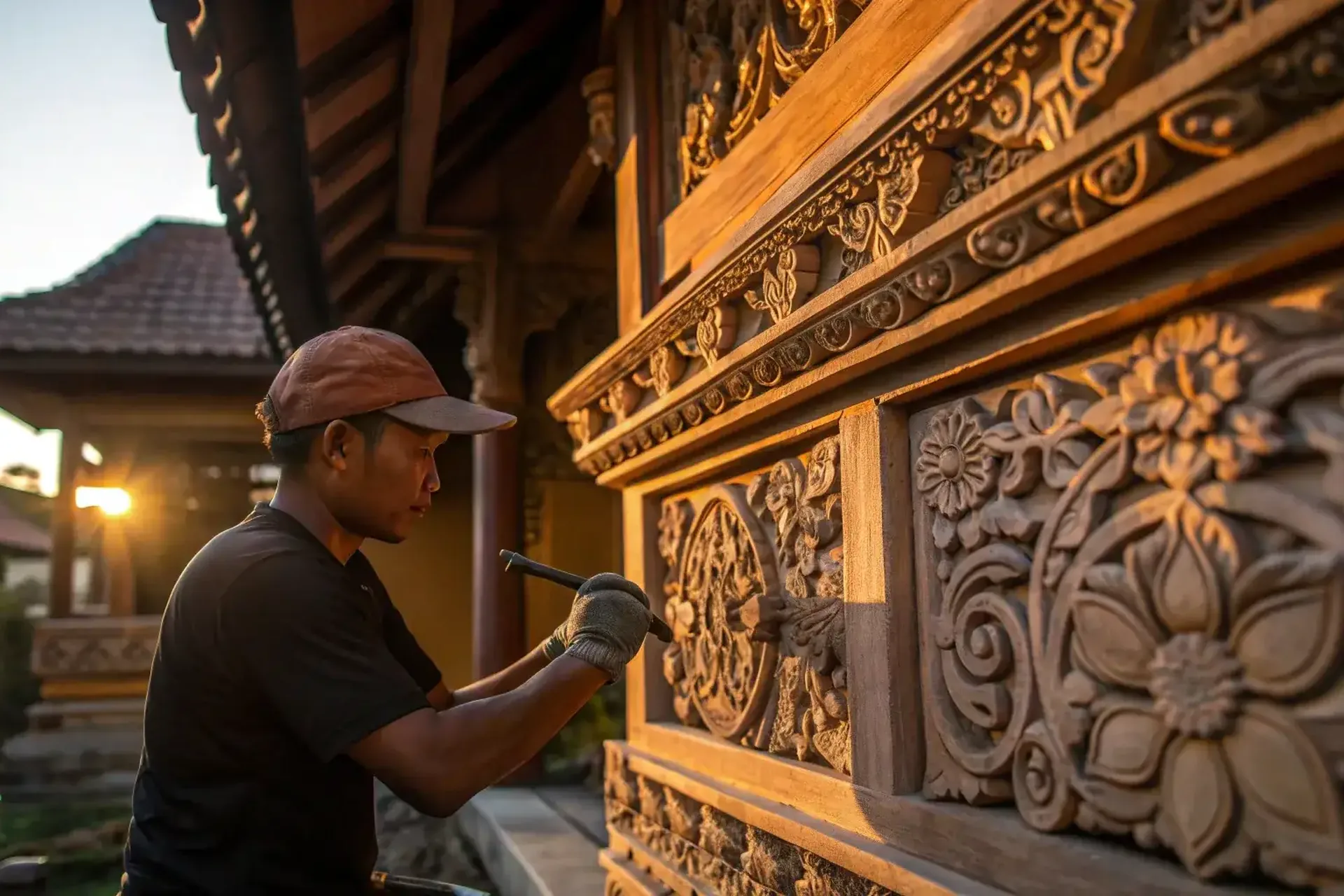
Traditional Balinese leathercraft is renowned for its meticulous craftsmanship and deep cultural roots. Artisans employ techniques handed down through generations, often using locally sourced materials.
- Craftsmen create intricate designs that reflect Balinese mythology and spirituality, emphasizing the island’s rich history
- Motifs such as Barong, the lion-like creature, and Rangda, the demon queen, are commonly depicted in traditional designs, symbolising the eternal battle between good and evil
- Leather is typically derived from cattle and goats, which are abundant in rural areas
- The tanning process is usually natural, using plant-based dyes and techniques that have been refined over centuries
- This method not only preserves the quality of the leather but also ensures that each piece is unique, with variations in colour and texture that reflect the artisanal touch
FAQ
Frequently Asked Questions
How do traditional and modern styles differ in Balinese leathercraft?
What materials are commonly used in modern Balinese leathercraft?
Where can I find the best Bali leather goods wholesalers for boutique stores in 2027?
Traditional Or Modern?
Tell Us What You Want Made And We Will Say Which Suits It
Hand-stitching and natural dyes take days to weeks per piece; machine construction does not. Which one is right depends on the object, not on the marketing.